
Webinar – The Dawn of a New Era in Sustainability: Multisectors and Multistakeholders
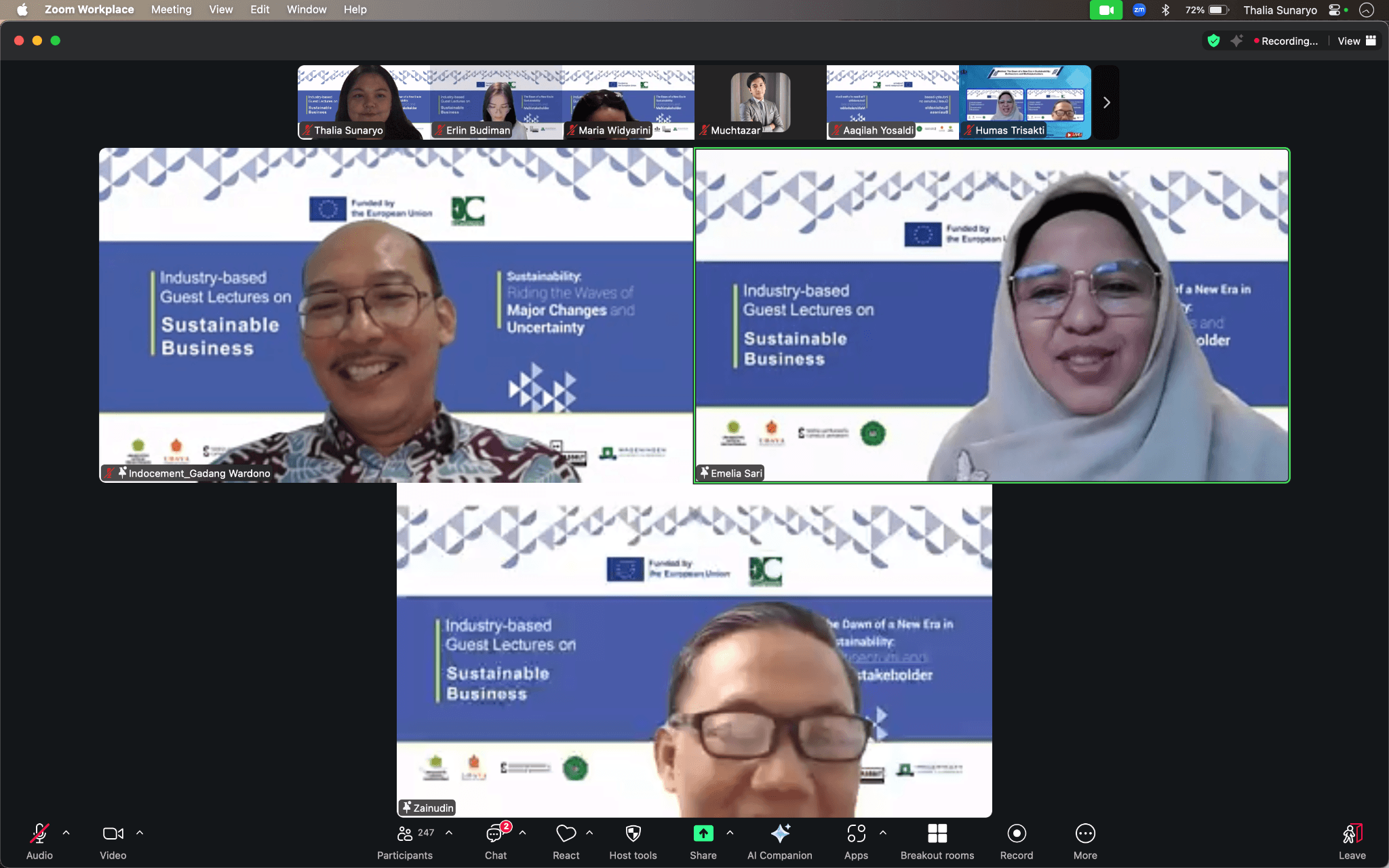
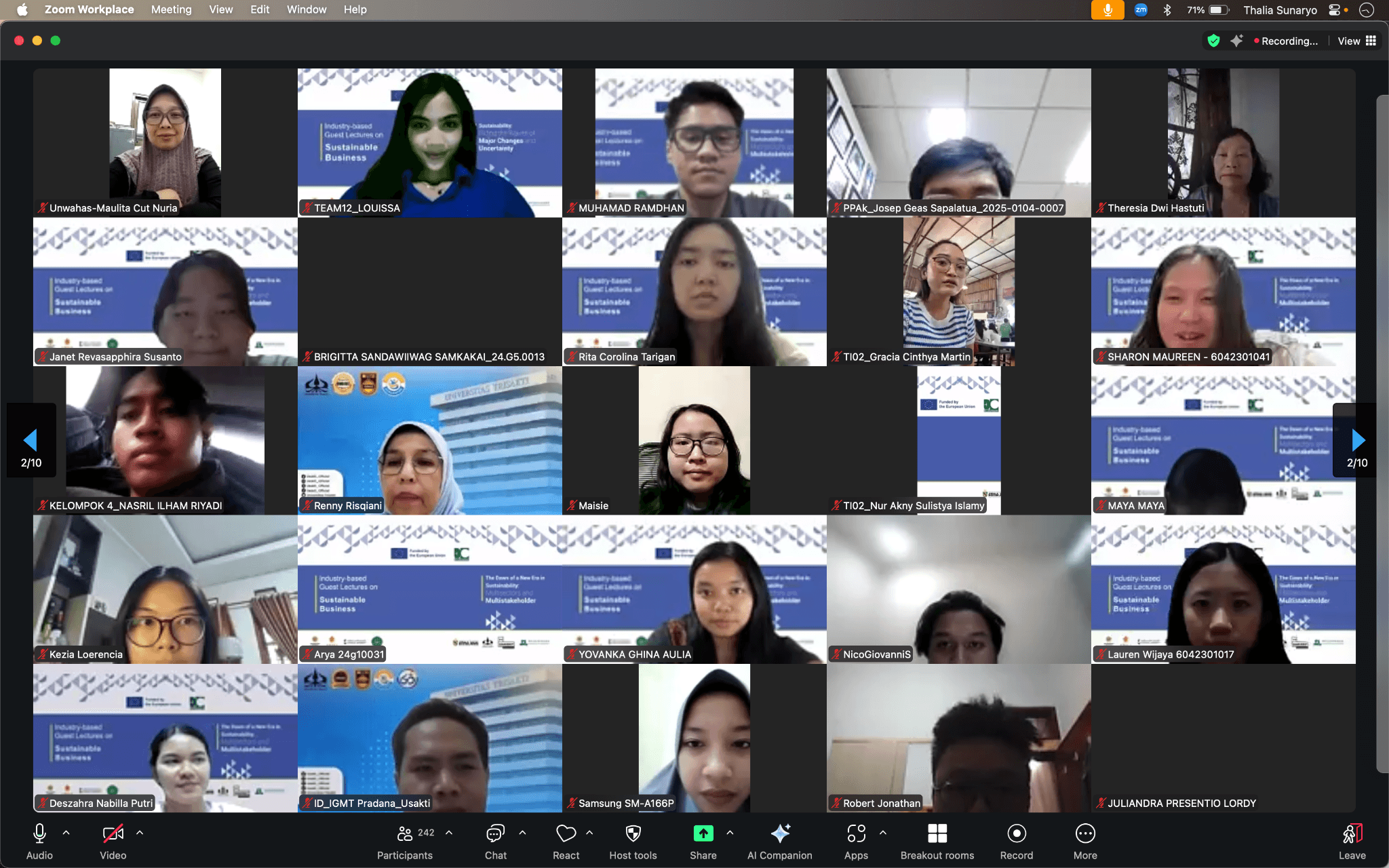
As the concluding session of the Industry-based Guest Lectures on Sustainable Business series, the Erasmus+ ECoGREEN Project successfully organized its fourth webinar, titled “The Dawn of a New Era in Sustainability: Multisectors and Multistakeholders”, on 24 October 2025. The webinar attracted 233 participants, consisting primarily of students, lecturers, and practitioners from partner universities and related organizations, alongside representatives from SMEs and government institutions. The session explored how sustainability transformation increasingly depends on cross-sector collaboration, multistakeholder engagement, and strong ESG governance to create meaningful and scalable impact.
The webinar featured three distinguished industry leaders representing manufacturing, mining, and infrastructure sectors, each sharing practical experiences on embedding sustainability into business strategy, operations, and long-term organizational development.
Driving Sustainability Through Industrial Transformation – PT Indocement Tunggal Prakarsa Tbk.
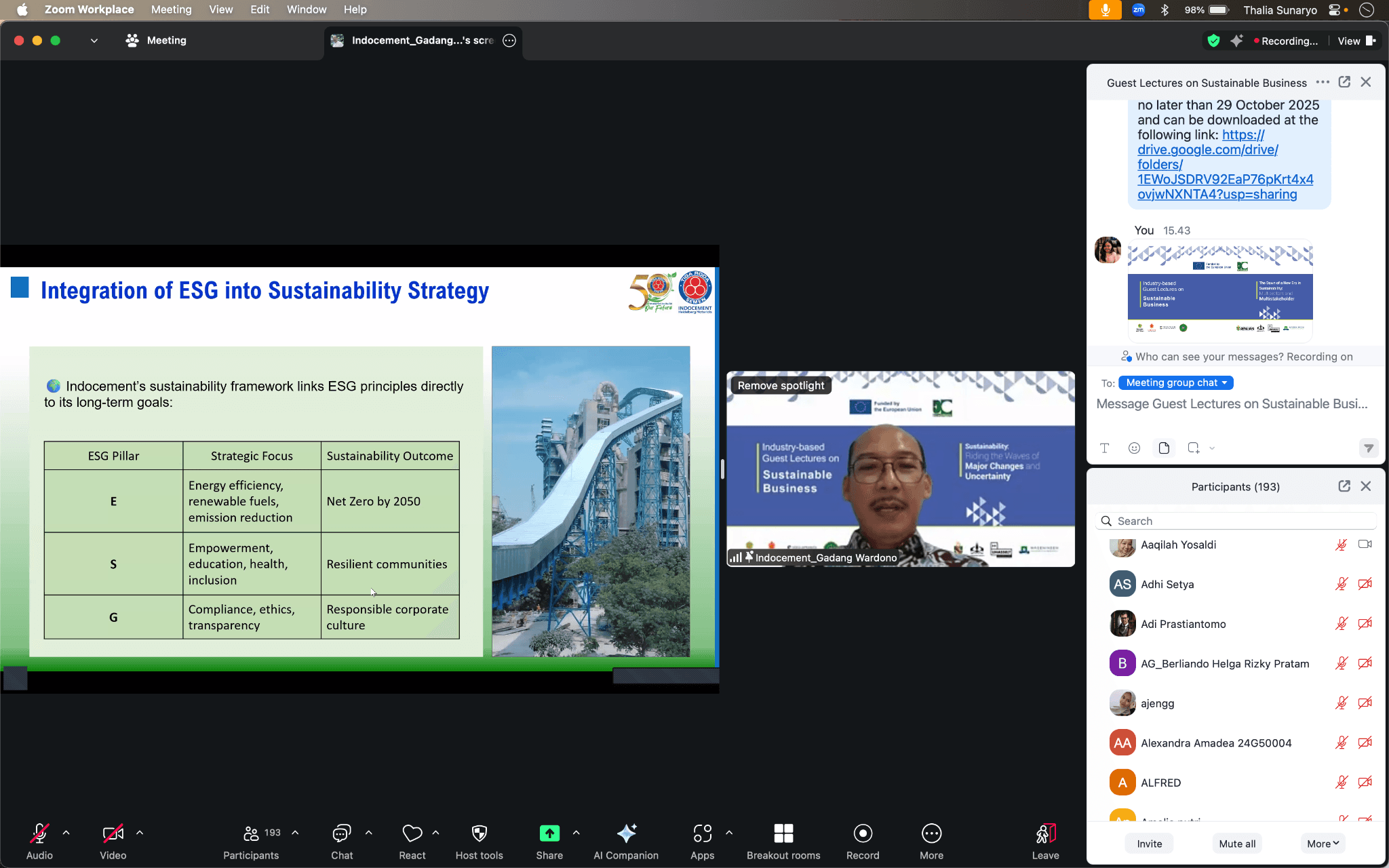
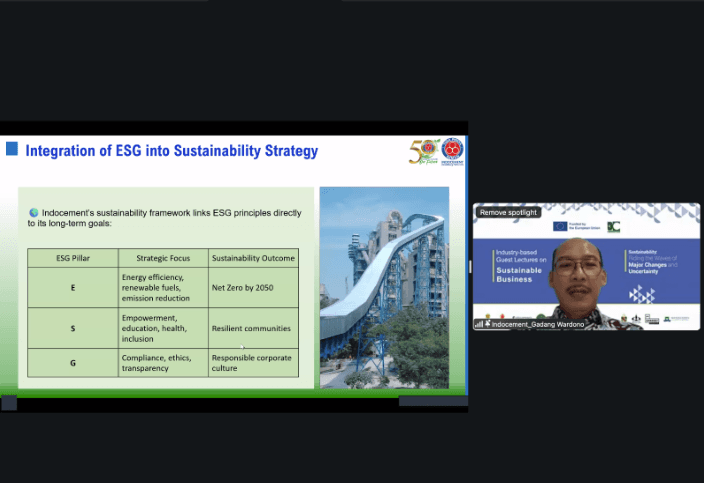
Gadang Wardono, Corporate Social Responsibility Manager at PT Indocement Tunggal Prakarsa Tbk., delivered a presentation titled “Collaborating for a Greener Future.” He highlighted one of the major realities of industrial sustainability: the cement sector contributes approximately 7% of global CO₂ emissions, with nearly 90% of fuel consumption still dependent on fossil energy. In response, Indocement has advanced a broad ESG strategy that includes 35.1% emission reduction initiatives, the use of alternative fuels, increased renewable energy adoption, circular economy implementation, and environmental rehabilitation programs involving the planting of 152,000 trees.
Beyond environmental initiatives, Indocement demonstrated strong social impact by engaging communities in waste-to-fuel initiatives that simultaneously generate local income, establishing SMK Tunggal Prakarsa Vocational School, and supporting broader community empowerment programs. These efforts are reinforced by robust governance mechanisms—including an Anti-Bribery Policy, Code of Business Conduct, and Whistleblowing System—which contributed to the company achieving an impressive ASEAN Corporate Governance Scorecard of 102.37 in 2024, reflecting exceptional governance standards.
Responsible Resource Extraction for the Energy Transition – Nickel Industries Limited
Representing the mining sector, Muchtazar, Head of Sustainability at Nickel Industries Limited, discussed the growing strategic importance of nickel as a critical material supporting the digital economy and global electrification—from smartphones and laptops to batteries and electric vehicles. Recognizing this responsibility, Nickel Industries has built sustainability around multistakeholder partnerships that strengthen ESG performance across operations.
He shared that through its High Pressure Acid Leach (HPAL) project, the company has achieved approximately 25% lower energy consumption and 20% lower carbon emissions compared with comparable processes, while integrating renewable power sources into its decarbonization pathway. Socially, Nickel Industries contributes through scholarship programs with Hasanuddin University, community tree-planting initiatives, and local empowerment programs. Strong governance is maintained through clear policies on anti-corruption, human rights, anti-slavery, and equal opportunity, ensuring ethical and accountable operations.
Building Long-Term Value Through ESG Integration – PT Surya Semesta Internusa Tbk.
Erlin Budiman, Vice President of Investor Relations & Sustainability at PT Surya Semesta Internusa Tbk., presented “Building Tomorrow Through ESG,” highlighting how ESG integration enables organizations to become more resilient, efficient, and future-ready. She emphasized that sustainability reporting is not merely disclosure, but a strategic mechanism for strengthening stakeholder trust and organizational preparedness.
SSIA’s sustainability strategy is built around four pillars—Products, Environment, People, and Community—each grounded in clear governance structures. These pillars guide the company’s efforts in delivering environmentally responsible products, preserving natural resources through energy and water conservation, prioritizing worker safety and capacity development, and building meaningful social impact through community-focused CSR initiatives. Collectively, these pillars create long-term value not only for the company, but also for society and the environment.
Core Takeaway: Sustainability as a Shared System
The fourth and final webinar reinforced a central message: sustainability is no longer an isolated organizational agenda—it is a shared system requiring collaboration across sectors, institutions, and communities. Across manufacturing, mining, and infrastructure, the speakers demonstrated that long-term sustainability depends on:
* cross-sector partnerships,
* community inclusion,
* transparent governance,
* innovation-driven operational transformation, and
* collective responsibility for environmental and social outcomes.
The session concluded that building a sustainable future requires businesses, academia, government, and communities to move beyond siloed approaches and work together through multistakeholder ecosystems capable of driving systemic change.
As the closing chapter of ECoGREEN’s Industry-based Guest Lecture Series, this webinar encapsulated one of the project’s strongest messages: sustainability is built not by one sector alone, but through collaboration, accountability, and shared innovation toward a greener and more inclusive future.