
Webinar – Sustainability: Riding the Waves of Major Changes and Uncertainty

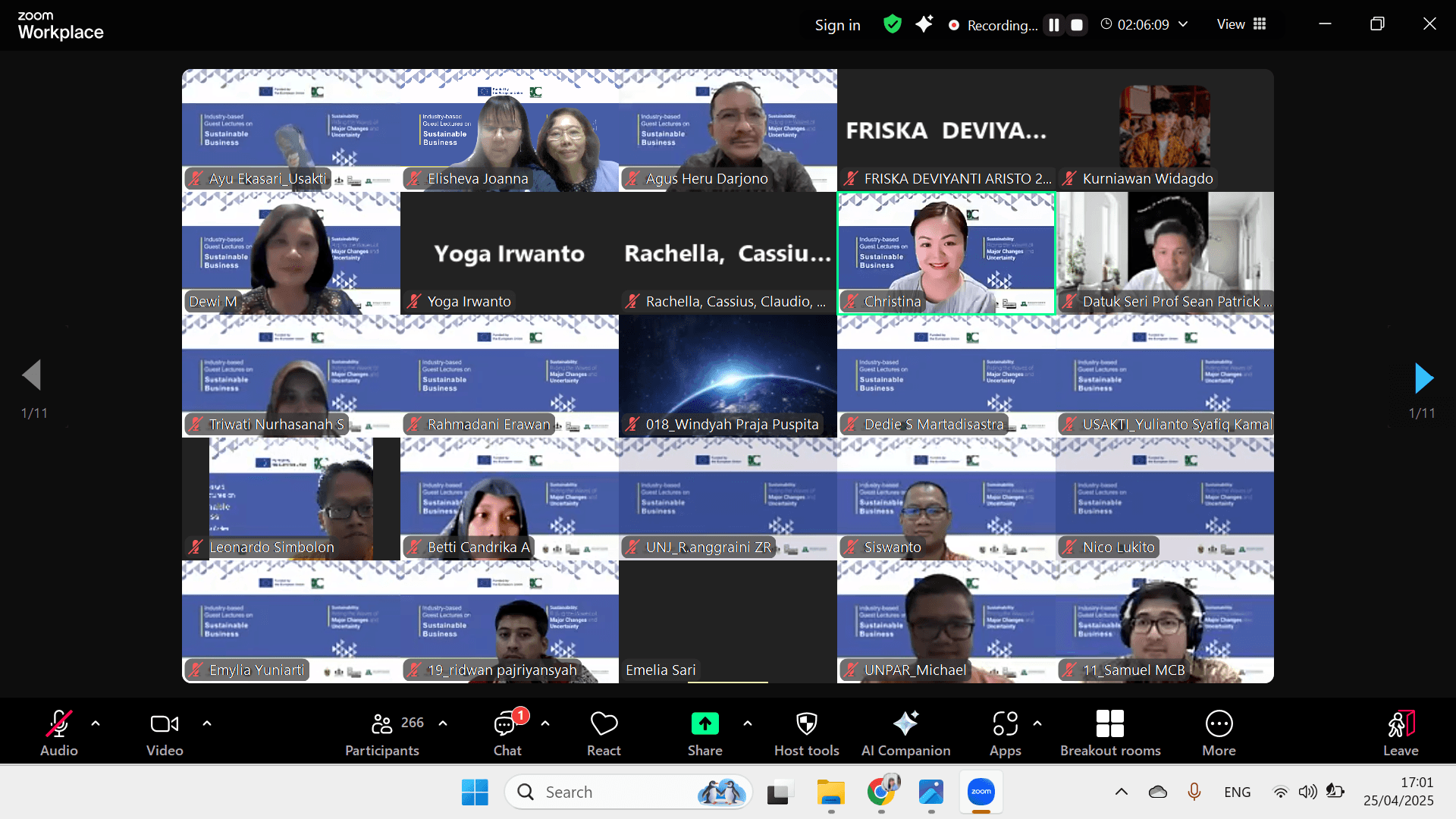
The third session of the Industry-based Guest Lectures on Sustainable Business brought together 362 participants, comprising students, lecturers, academic partners, SME representatives, and public sector participants. The webinar focused on how sustainability serves as a strategic foundation for resilience and adaptability amid rapid global transformation and uncertainty.
Key Insights from Industry Leaders
1. Sustainability as End-to-End Value Creation – Bundamedik Indonesia
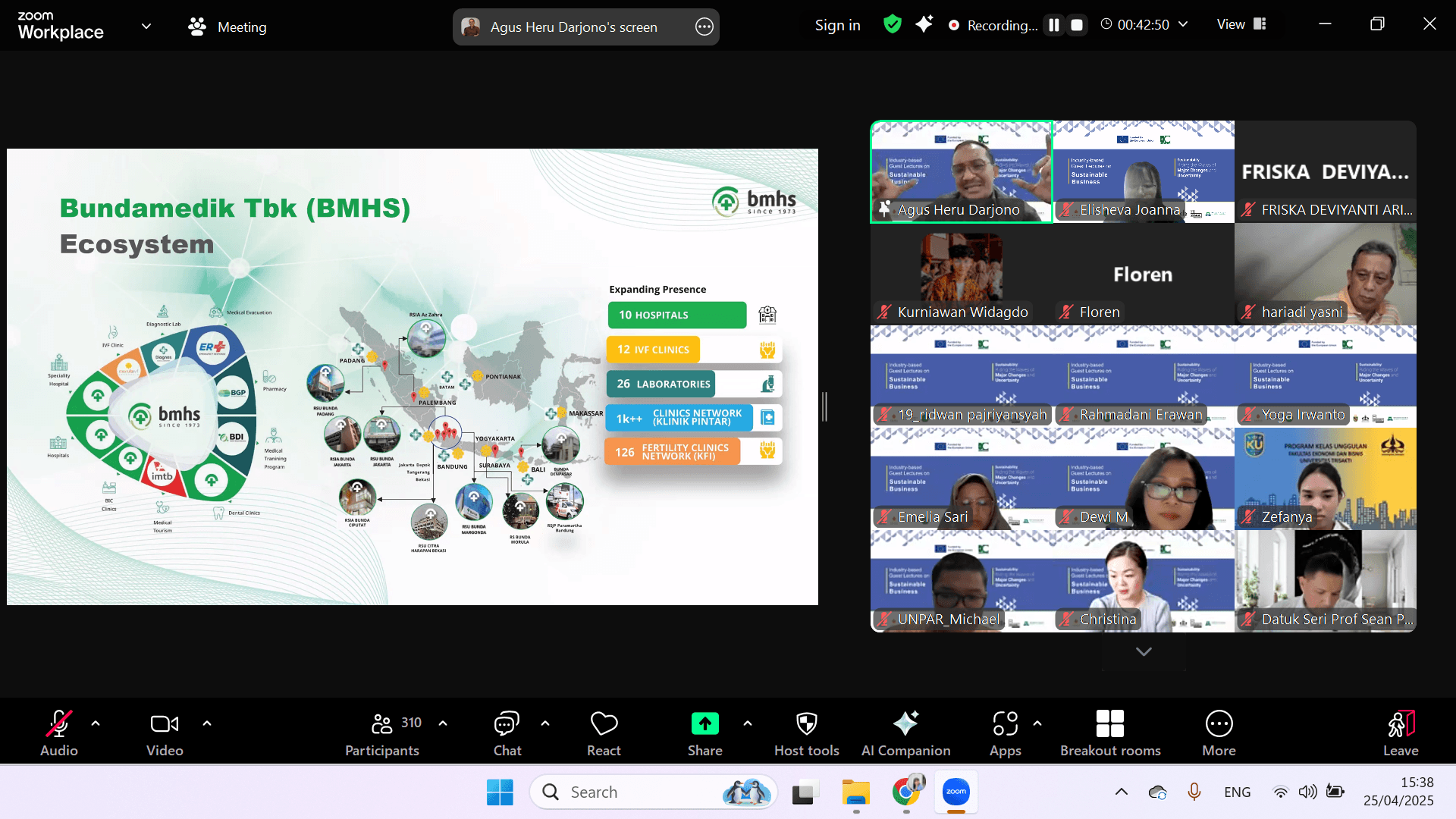
Agus Heru Darjono, President Director of Bundamedik Indonesia Tbk., highlighted how Bundamedik’s corporate philosophy—symbolized by the value “IBU”—reflects a holistic lifecycle approach to healthcare, supporting individuals from embryonic development through elderly care. This philosophy demonstrates that ESG integration is not merely operational compliance, but a long-term commitment embedded throughout the patient journey. He emphasized that sustainability should be understood as life-spanning service continuity, where long-term care quality, social responsibility, and operational resilience create enduring value. Importantly, Bundamedik’s ESG integration has also been linked to improved financial performance, reinforcing that sustainability and profitability can grow together.
2. Resilience Through Inclusive and Affordable Sustainability – Prodia
Dewi Mulyati, President Director of Prodia Widyahusada Tbk., shared how Prodia balances operational excellence with affordability to ensure long-term accessibility. Through its Sustainable Action Plan, Prodia aligns ESG initiatives with the UN Sustainable Development Goals, focusing on health, education, gender equality, and environmental stewardship. Programs such as green clinic infrastructure, improved waste management, and the “Prodia in U” campaign—which encourages container reuse and reduced plastic consumption—demonstrate how sustainability can be operationalized into everyday healthcare services. Prodia’s approach shows that resilience is built not only through efficiency, but also through inclusivity, transparency, and responsible governance.
3. Lifelong Learning as Sustainability Capital – Graduate Women Association Singapore
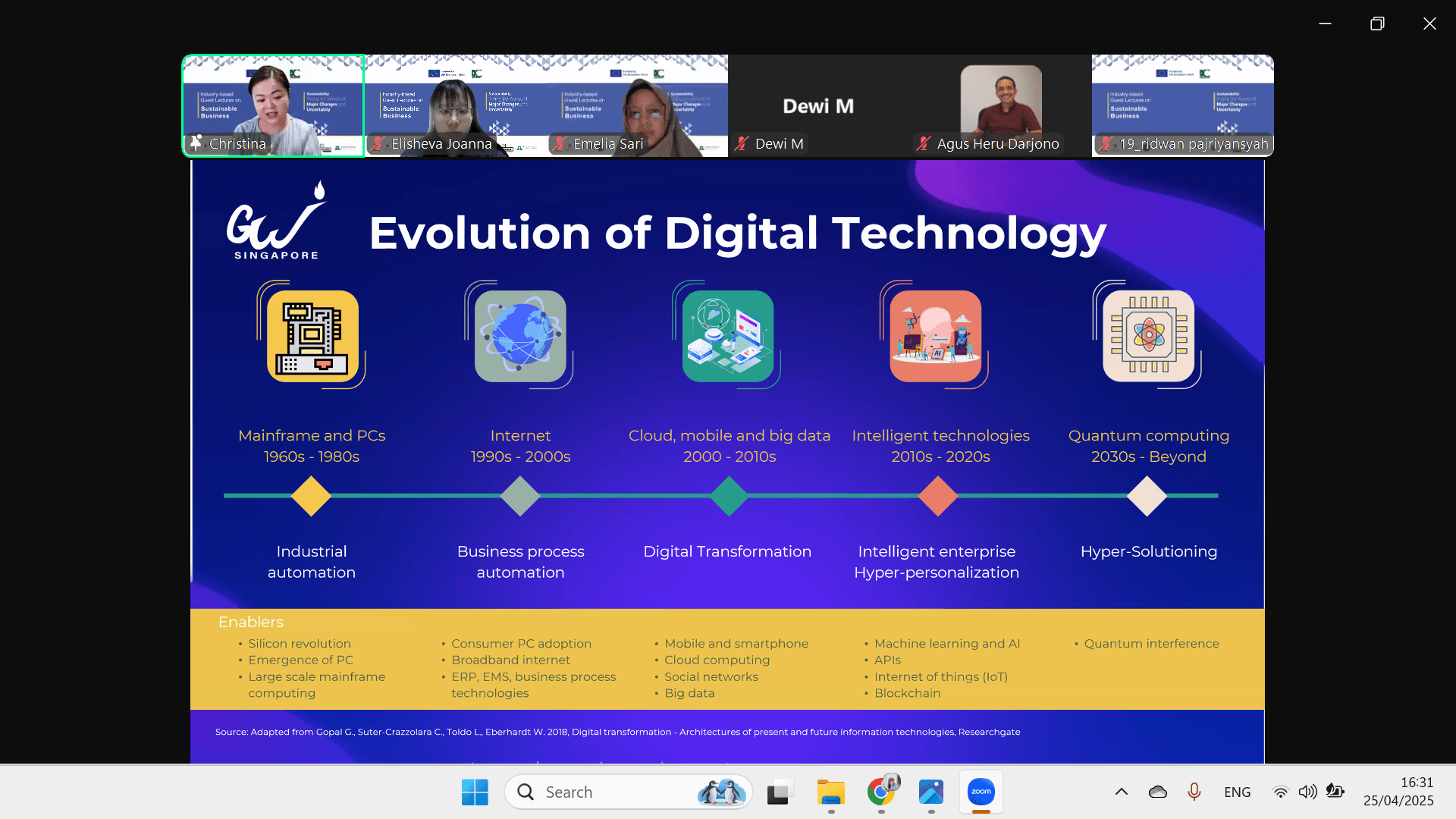
Christina Tian, President of the Graduate Women Association Singapore, delivered a compelling perspective on “Lifelong Learning in the Digital Economy: Scaling Beyond Frontiers.” She emphasized that digital capability has become a critical pillar of sustainability, arguing that resilience in uncertain times depends heavily on continuous learning and upskilling. Her presentation positioned lifelong learning as strategic capital—enabling individuals and organizations to remain adaptive, innovative, and competitive amid technological disruption. This perspective broadened sustainability beyond environmental concerns, framing it as a system of continuous capability building, inclusivity, and future readiness.
Core Takeaway
The webinar reinforced that sustainability is no longer a peripheral corporate initiative, but a central business strategy for navigating uncertainty. Across healthcare, diagnostics, and education sectors, the speakers demonstrated that resilient organizations share common traits:
long-term strategic thinking,
strong ESG integration,
commitment to affordability and inclusivity,
continuous innovation, and
investment in human capability development.
Ultimately, sustainability emerged as both a moral responsibility and a competitive advantage, providing organizations with the foundation to adapt, innovate, and thrive amid major global change.
.